You are filling a job form, and it asks for your most recent employer. A small doubt pops up: is it correct to say most recent, or should it be something else?
The short truth is that most recent is fully correct. This guide explains why, how the grammar works, and when latest or newest may fit even better.
Quick Answer
Yes. Most recent is grammatically correct and safe in formal and daily English. Recent is a longer adjective, so it forms its superlative with most. The word recentest is not standard English.

What Does “Most Recent” Mean?
It points to the latest one in time: the thing that happened or existed nearest to now. ‘My most recent trip’ means the last trip I took, with none after it.
Is “Most Recent” Grammatically Correct?
Yes. The answer to ‘is it correct to say most recent’ follows the normal rule for longer adjectives. Just as we say most important and most useful, we say most recent. Dictionaries and style guides accept it without any warning.
Why “Most Recent” Sounds Odd to Some People
Some people who wonder ‘is it correct to say most recent’ expect every superlative to end in est, like fastest. Because recent ends in ent, the ear may hunt for a form like recentest. That pull is only a habit, not a rule.
Is “Most Recent” Redundant? The Short Truth
No. Recent alone can cover several past items. Most recent picks the single latest one. In ‘her recent books’, there may be five. In ‘her most recent book’, there is exactly one.
How Superlatives Work in English Grammar
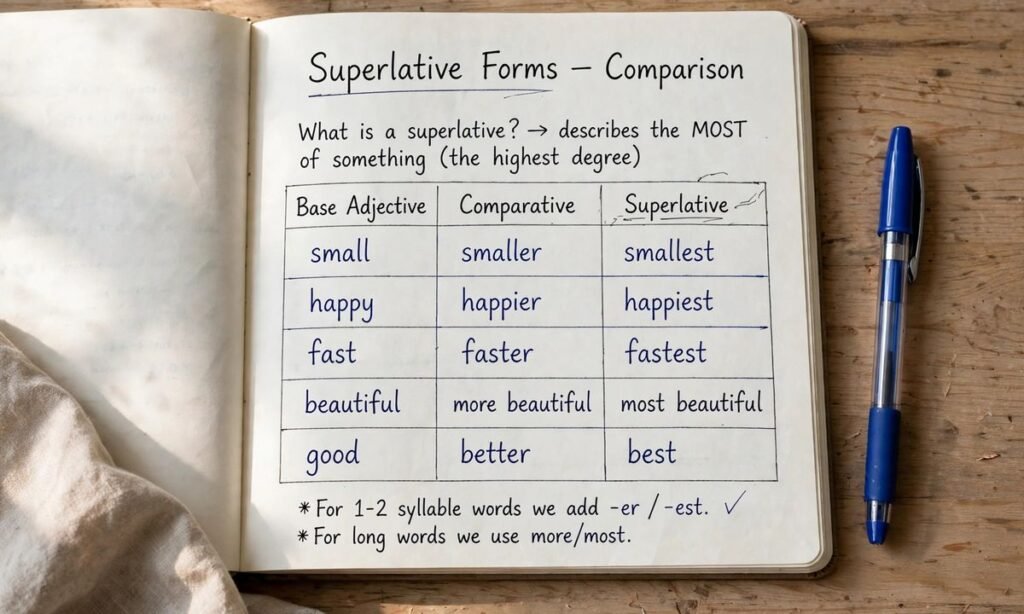
English builds the superlative form in two ways, based on the length of the adjective.
Short Adjectives Usually Add “-est”
Short words usually add est: fast becomes fastest, soon becomes soonest. One clean step, with no extra word.
Longer Adjectives Usually Use “Most”
Recent has two syllables and ends in ent, like important and frequent. Words like these use most: most important, most frequent, most recent.
Is “Recentest” a Real Word?
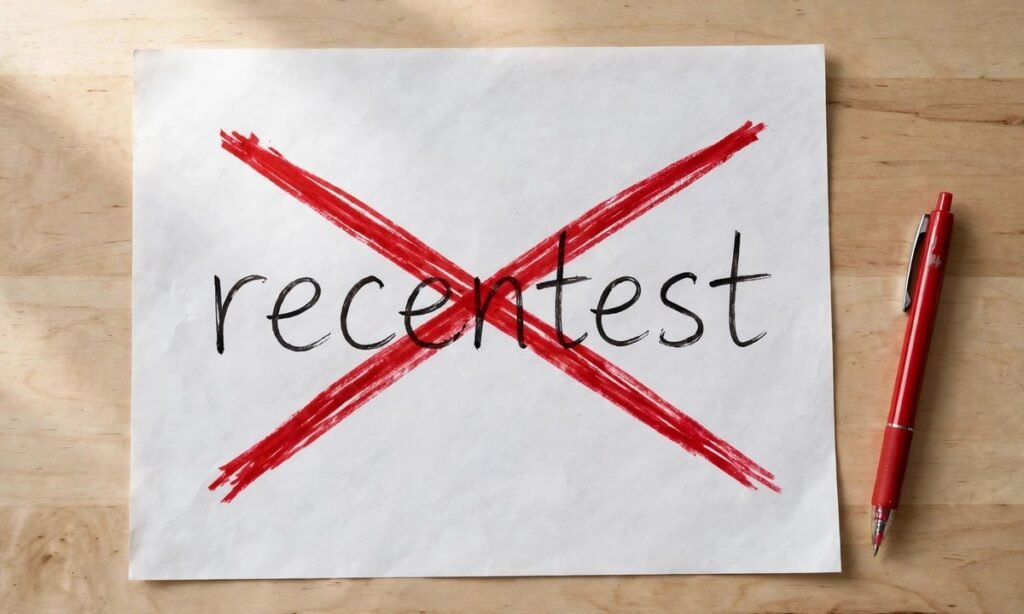
No. Recentest is not a standard English word. You will not find it in normal dictionaries, and editors mark it as an error. Always write most recent.
When Should You Use “Most Recent”?
If you ask ‘is it correct to say most recent’, use most recent when you point to the latest item in a series and the setting is a little formal.
Using “Most Recent” in Professional Writing
‘Please share your most recent report.’ In office writing, the phrase sounds precise and calm.
Using “Most Recent” in Academic Writing
‘The most recent study shows clear gains.’ Research writing likes its exact, neutral tone.
Using “Most Recent” in Technology
‘Install the most recent update.’ Tech pages use it for versions and releases.
Using “Most Recent” in Everyday Conversation
‘My most recent haircut was in May.’ It works in speech too, just slightly formal.
“Most Recent” With Time Words: Week, Month, and Year
If you ask ‘is it correct to say most recent’, the phrase pairs well with time nouns: ‘the most recent week’, ‘her most recent month at the job’, ‘the most recent year on record’. Each time, it picks the latest full period.
“Most Recent” vs. “Latest”: Which Is Better?
Both are correct. The difference is tone and habit, not grammar.
“Most Recent” Sounds More Formal
Most recent sounds measured and official, so forms, reports, and records prefer it.
“Latest” Sounds More Casual
Latest is shorter and lighter, so news headlines and daily chat use it more.
Side-by-Side Comparison
This table shows the split:
| Word | Tone | Best For |
|---|---|---|
| Most recent | Formal, precise | Forms, reports, records |
| Latest | Light, casual | News, chat, ads |
Situations Where “Most Recent” Works Better Than “Latest”
- Job forms asking for your most recent employer.
- Medical and legal records.
- Official reports where one exact item matters.
Situations Where “Latest” Sounds More Natural
- Headlines: ‘Latest news just in.’
- Music and shows: ‘her latest album’.
- Quick chat: ‘Seen the latest?’
Common Places You’ll See “Most Recent”
You will meet the phrase often in these areas:
Job Applications
Forms ask for your ‘most recent employer’ and ‘most recent position’ to get your latest work first.
Banking and Finance
Banks ask for your ‘most recent statement’ or ‘most recent address’ to keep records current.
Healthcare and Medical Records
Clinics record your ‘most recent visit’ and ‘most recent test results’ for safe care.
Technology and Software
Software pages offer the ‘most recent version’ of an app or driver.
Academic and Research Writing
Papers cite the ‘most recent data’ and the ‘most recent edition’ of a source.
Common Mistakes People Make With “Most Recent”
Three errors show up again and again:
Using “Recentest” Instead of “Most Recent”
Writing recentest is the top error. If you catch it, replace it with most recent at once.
Confusing “Current” With “Most Recent”
Current means happening now. Most recent means the latest in the past. A closed file can be most recent, but not current.
Creating Redundant Phrases
Avoid stacks like ‘most recent latest update’. Pick one word. Double superlatives sound careless.
Is “Most Recently” Correct Too?
Yes. Most recently is the adverb form, used with verbs instead of nouns.
“Most Recent” Functions as an Adjective Phrase
Most recent describes a noun: ‘the most recent email’, ‘my most recent job’.
“Most Recently” Functions as an Adverb Phrase
Most recently describes a verb: ‘I most recently worked in sales’, ‘she most recently lived in Ohio’.
Quick Comparison Table
One look makes it clear:
| Form | Job in the Sentence | Example |
|---|---|---|
| Most recent | Describes a noun | The most recent photo |
| Most recently | Describes a verb | He most recently called on Monday |
“Most Recently” in a Sentence: Clear Examples
- ‘The museum most recently hosted a photo show.’
- ‘He most recently worked as a nurse in Texas.’
- ‘Prices most recently rose in June.’
Using “I Have Recently” Correctly
‘I have recently’ joins have with the adverb recently: ‘I have recently moved to Denver.’ It tells that a past action still matters now.
What Does “Just Recently” Mean?
Just recently means a very short time ago: ‘We just recently hired two clerks.’ The word just shrinks the time gap and adds stress.
Why Professional Writing Prefers “Most Recent”
If you ask ‘is it correct to say most recent’, formal writing values exact picks from a series. Most recent names the latest record without slang or guesswork, so reports and forms trust it.
Why HR Departments Use “Most Recent” Constantly
HR teams sort work history by time. Most recent employer puts the newest job first and prevents mix-ups between old and current roles.

Why Legal and Medical Fields Prefer Precise Wording
In law and medicine, one wrong date can change a case or a treatment. Precise phrases like most recent keep records clear and safe.
Real-World Examples of “Most Recent” in Sentences
Here are natural sentences from daily life:
Workplace Examples
- ‘Please attach your most recent payslip.’
- ‘Our most recent meeting ended early.’
Academic Examples
- ‘The most recent census counted 40,000 people.’
- ‘Use the most recent edition of the book.’
Everyday Conversation Examples
- ‘My most recent call was from my sister.’
- ‘That is my most recent photo.’
Technology Examples
- ‘Download the most recent version.’
- ‘The most recent update fixed the bug.’

Healthcare Examples
- ‘Her most recent scan looks clear.’
- ‘List your most recent medicines.’

Better Alternatives to “Most Recent”
Sometimes a shorter word fits better:
When “Newest” Works Better
Newest suits things that are made or released: ‘the newest phone’, ‘her newest song’. It stresses fresh creation.
When “Current” Works Better
Current suits things still active now: ‘my current address’, ‘the current price’. It points to the present, not the past.
Synonyms for Recently and Most Recently
- lately: ‘I have been busy lately.’
- just: ‘She just left.’
- of late: ‘Sales rose of late.’
- not long ago: ‘We met not long ago.’
Each one replaces recently in the right tone.
Why Native Speakers Rarely Question the Phrase
If you ask ‘is it correct to say most recent’, native speakers grow up hearing most recent on forms, news, and records. The phrase feels normal, so they never stop to question it.
A Simple Trick to Remember the Rule
Trick: if the adjective is long, use most. Recent is long, so most recent is right. Short word, add est. Long word, add most.
Tip: When a long adjective fights your ear, trust the pattern, not the sound. Long word, use most.
Mini Case Study: Why “Most Recent” Prevents Confusion
A clinic form once asked for the ‘recent medicine’ of a patient. One patient listed an old drug, another the newest one. The form changed to ‘most recent medicine’, and the answers became exact.
Expert Grammar Insight About “Most Recent”
If you ask ‘is it correct to say most recent’, grammar experts treat most recent as the standard superlative of recent. The form is settled in dictionaries, style guides, and edited writing.
Quick Practice: Choose the Right Word
Pick the correct option:
- ‘Please send your (most recent / recentest) address.’
- ‘She (most recent / most recently) joined the team in June.’
- ‘This is the (latest / current) price, still active today.’
Answers: most recent, most recently, current.
Most Recent vs Most Recently: One-Minute Decision Guide
- Describing a noun? Use most recent.
- Describing a verb? Use most recently.
- Want a casual tone? Latest is fine.

Conclusion
So, is it correct to say most recent? Yes, fully. Use most recent for the latest item in formal or daily writing, most recently with verbs, and latest when you want a lighter tone.
FAQs
Can I say ‘most recent’ in an email?
Yes. It is polite and standard in email, especially for reports, records, and updates.
What is the difference between ‘most recent’ and ‘recent’?
Recent can point to several near-past items. Most recent points to the single latest one.
Is ‘latest’ always a safe swap for ‘most recent’?
Almost always in meaning, but the tone changes. Latest feels lighter and suits news and chat better.
Why do forms ask for my ‘most recent employer’?
They want your newest job first. It helps them read your work history in the right order.
Does ‘most recent’ need a hyphen?
No. Write it as two plain words: most recent. A hyphen is not used in this phrase.
