You write in the same day in an email, then pause. It looks fine, yet something feels off. This small doubt is common, because in the same day or on the same day is a choice many writers face every week.
The good news is that the in the same day or on the same day rule is simple. This guide shows you the correct phrase, why the other one sounds wrong, and the few cases where in can still work.
Quick Answer
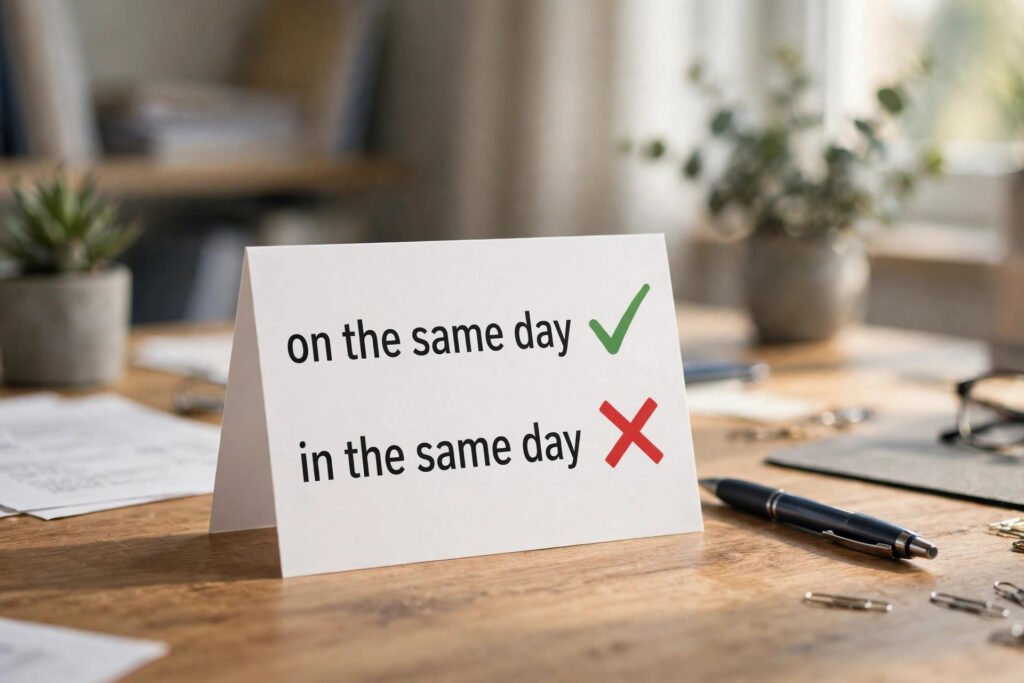
Use on the same day. In English, on goes with days and dates, so on the same day is the natural and correct choice. In the same day sounds unnatural in normal writing. If you mean a period of 24 hours, say in one day or within a day instead.
Quick Summary
In short: on the same day is correct for one specific day. In the same day is rarely used by native speakers. For a length of time, in one day is the phrase you want.
Why “In the Same Day” vs “On the Same Day” Confuses So Many Writers
Both in and on talk about time, so they feel interchangeable. They are not. English uses in for longer periods like months and years, and on for days and dates. Many learners also translate word by word from their own language, where one word covers both.

The Short Answer: Which One Should You Use?
When it is in the same day or on the same day, choose on the same day in almost every situation. It is the form native speakers use in emails, reports, news, and daily speech. The examples below show how natural it sounds.
Simple Examples
- She got the job offer and the visa on the same day.
- We landed in Chicago and met our clients on the same day.
- He finished the test and got the result on the same day.
What Does “On the Same Day” Really Mean?
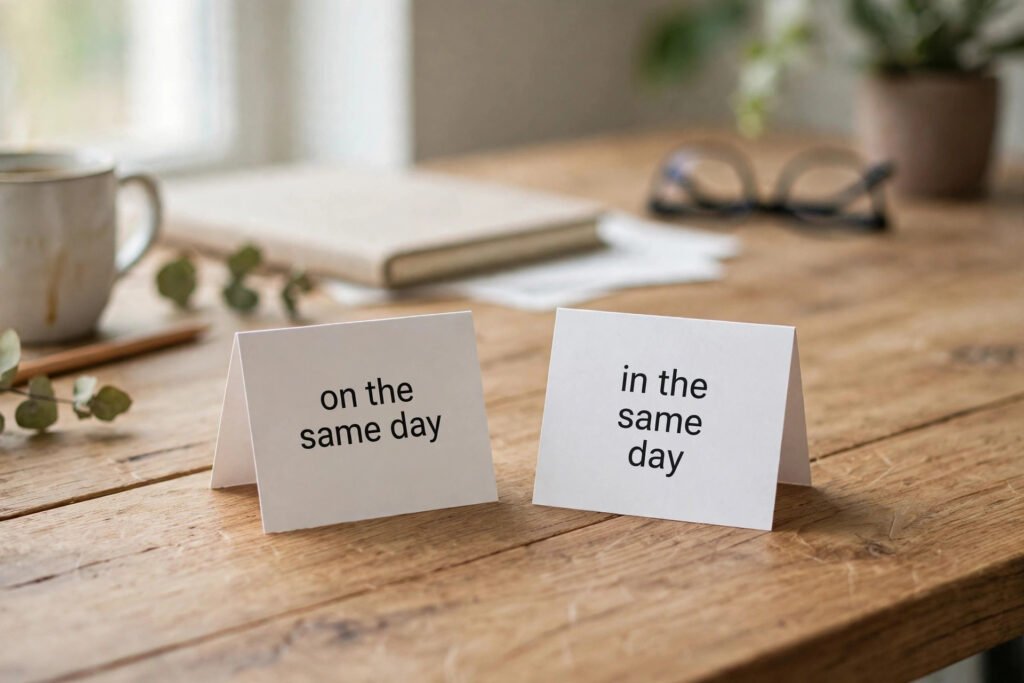
It links two events to one single day on the calendar. Nothing about length or duration. Just the same date.
Core Meaning
When you say on the same day, you point to one date and say both things happened then. It answers the question ‘when?’ with a day, not with a period of time.
When to Use “On the Same Day”
Use it when:
- Two events happened on one date.
- You name a day or date nearby, like Monday or May 5.
- You write news, emails, or reports about a specific day.
Real-Life Examples
- The package was shipped and delivered on the same day.
- Their wedding and their house move fell on the same day.
- I paid the bill on the same day it arrived.
Why It Sounds Natural
Days sit in the on family in English: on Monday, on Friday, on my birthday, on July 4. On the same day follows the same pattern, so the ear accepts it at once.
What Does “In the Same Day” Mean?
Most of the time, it is simply a mistake. Learners build it from in phrases they already know, like ‘in the morning’. But a day named as a date does not take in.
Core Meaning
If a writer uses in the same day, readers usually understand ‘within that day’. The meaning gets through, but the phrase still sounds foreign and can hurt formal writing.
When You Can Use “In the Same Day”
In can appear when the day is treated as a length of time, mostly in older or formal texts. Even then, modern writers prefer within the same day or in one day. In daily writing, avoid it.
Examples Where It Works
- Formal: ‘The letter was written and sent within the same day.’
- Duration: ‘He read the whole book in one day.’
Notice that the natural versions change the phrase a little.
Why It Often Feels Unnatural
Native speakers sort time words by size without thinking. A single day is a point on the calendar, so it takes on. Putting in there breaks the pattern and slows the reader.
On the Same Day vs In the Same Day: Side-by-Side Comparison
This table sums up the in the same day or on the same day choice:
| Phrase | Meaning | Example |
|---|---|---|
| On the same day | On one specific date | She called on the same day. |
| In the same day | Rare, sounds unnatural | Avoid in normal writing |
| In one day | Within 24 hours | He drove 500 miles in one day. |
| Within the same day | Before that day ends | We reply within the same day. |
On the Same Day vs In One Day: Not the Same Thing
In one day measures time, like a stopwatch. On the same day points to a date, like a calendar. ‘He wrote the report in one day’ tells how long it took. ‘He wrote the report on the same day’ tells which day it was.

The Grammar Behind “On” vs “In” (Without the Boring Rules)
You do not need a grammar book for the in the same day or on the same day question. One simple pattern explains almost every case.
How Prepositions Work Here
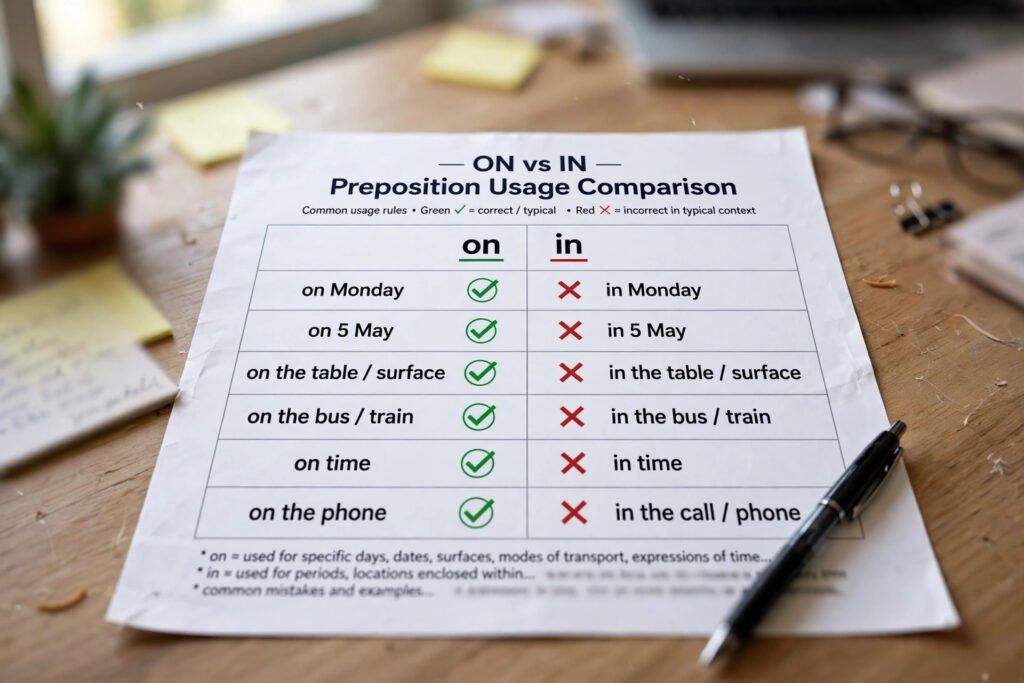
English sorts time into sizes. At is for clock times, on is for days and dates, and in is for longer stretches like weeks, months, and years. A single day belongs with on.
Examples That Make It Click
- at 9 a.m., on Monday, in June
- on the same day, on that day, on the next day
- in the same week, in the same month, in the same year
Quick Rule You Can Remember
Remember this: day takes ‘on’, period takes ‘in’. If you can point to the day on a calendar, use on.
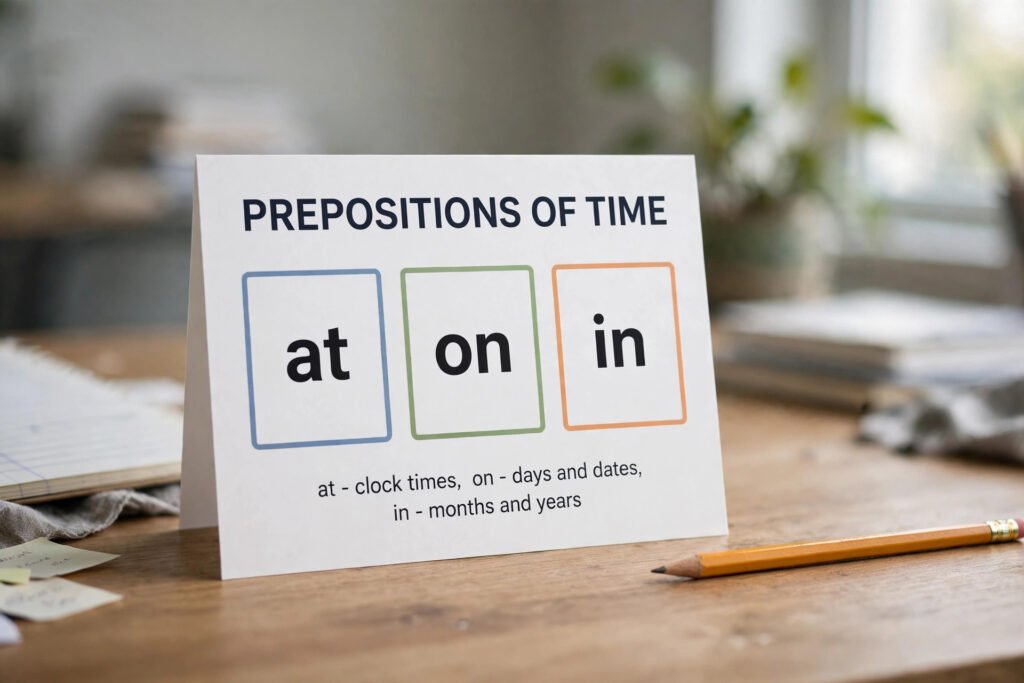
Tip: If the phrase names a day or a date, on is almost always right. When in doubt, choose on the same day.
On the Same Day With Dates and Days of the Week
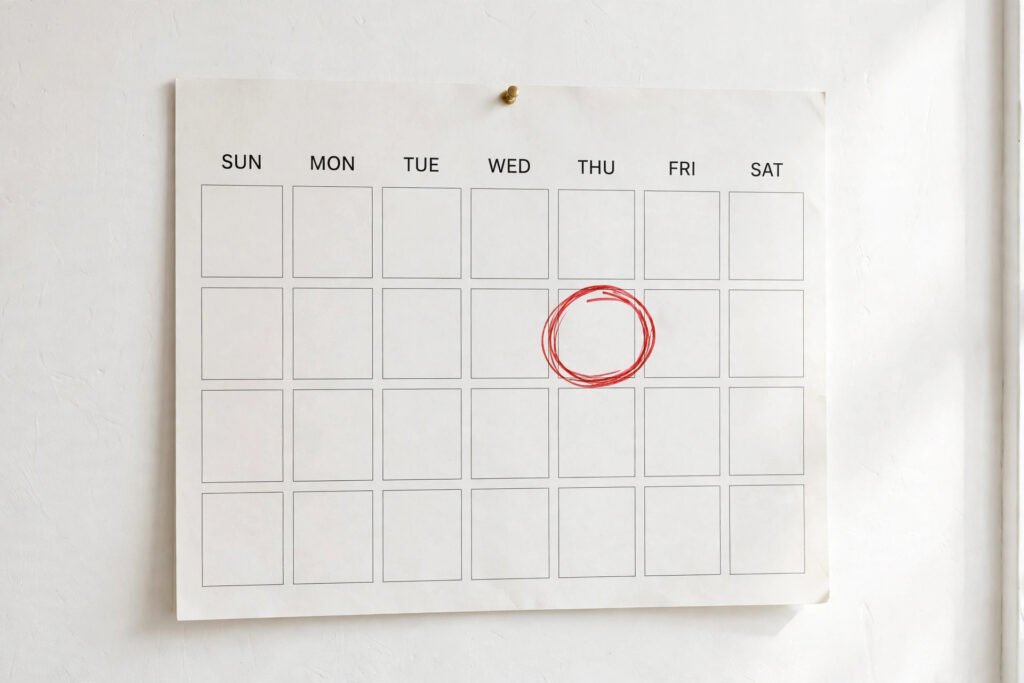
The same rule covers dates and weekdays. Say ‘on Monday’, ‘on May 5’, and ‘on the same day’. All three point to one day. So in ‘The meeting is on Friday, and the report is due on the same day’, both parts take on.
Common Mistakes and How to Fix Them
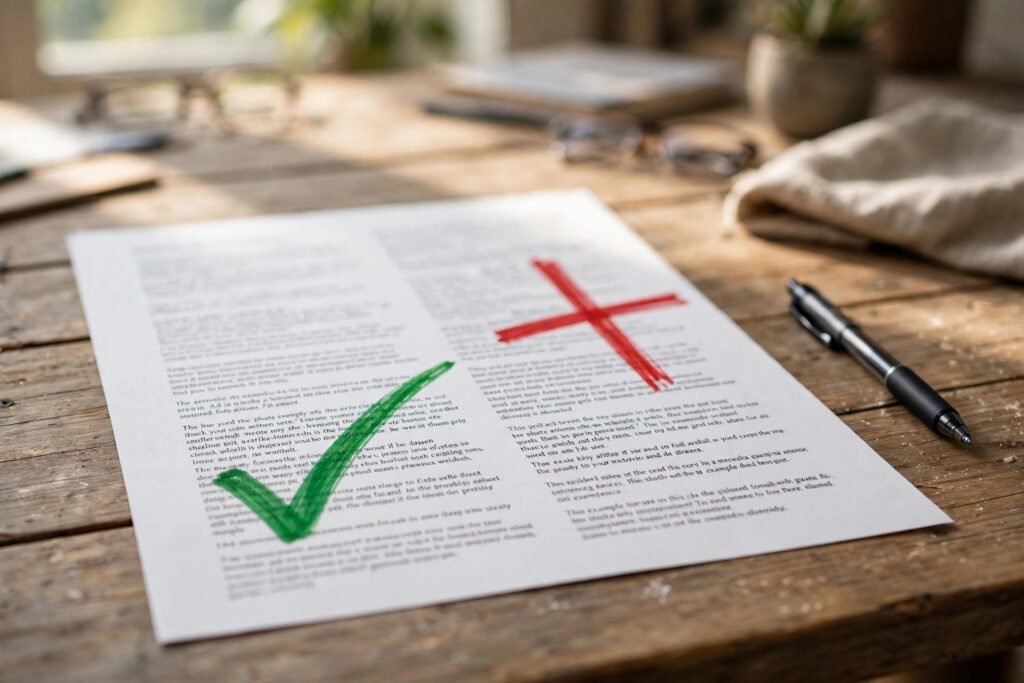
Here are the errors learners make most with in the same day or on the same day, with quick fixes.
Mistake 1: Using “In” for Dates
Wrong: ‘I was born in the same day as my cousin.’ Days never take in. Right: ‘I was born on the same day as my cousin.’
Mistake 2: Overcomplicating Simple Sentences
Some writers build long, tangled sentences to sound formal. Simple wins: ‘We met and signed the deal on the same day‘ is clear, short, and correct.
Mistake 3: Literal Translation from Other Languages
Many languages use one word for both ideas, so in slips in. Do not translate word by word. Learn on the same day as one fixed chunk.
Fix Strategy
Read your sentence and ask: is this a date or a length of time? Date means on. Length means in one day or within. This one question fixes most errors.
Real-Life Use Cases of “On the Same Day”
Once you learn the in the same day or on the same day rule, you start seeing the phrase everywhere.
Professional Emails
In office mail, it keeps timelines clear: ‘Thank you for your payment. Your receipt was issued on the same day.’ Clients trust clear dates.

Academic Writing
In essays and research, it links events with care: ‘The law was passed and signed on the same day.’ Precise wording supports precise facts.
Everyday Conversation
In speech it sounds light and natural: ‘You got the tickets? We leave on the same day then.’ Nobody says ‘in the same day’ in daily talk.
Case Study: How One Phrase Changes Clarity
With in the same day or on the same day, one tiny word can change how clear a message feels.
Scenario
A manager writes to a client about an order and wants to sound fast and reliable.
Version A
‘Your order was packed in the same day.’ The meaning is clear, but the phrase sounds off and weakens trust.
Version B
‘Your order was packed within the same day.’ Better. It stresses speed, but it is a little formal.
Version C (Best)
‘Your order was packed on the same day.’ Clean, natural, and confident. This is the version a native speaker would send.
Takeaway
Small preposition errors rarely block meaning. They do change how skilled and careful you sound.
Native Speaker Insight: What Sounds Right Instantly
Ask a native speaker about in the same day or on the same day and most will pick on without thinking. They may not know the rule, but the phrase lives in their ear as one block. That instant feel is what you train when you learn the pattern.
Which One Do Americans Use More?
On the same day wins by a wide margin in American books, news, and speech. In the same day is so rare that editors usually correct it on sight. When Americans mean duration, they switch to in one day or within a day.
Quick Practice: Test Your Understanding
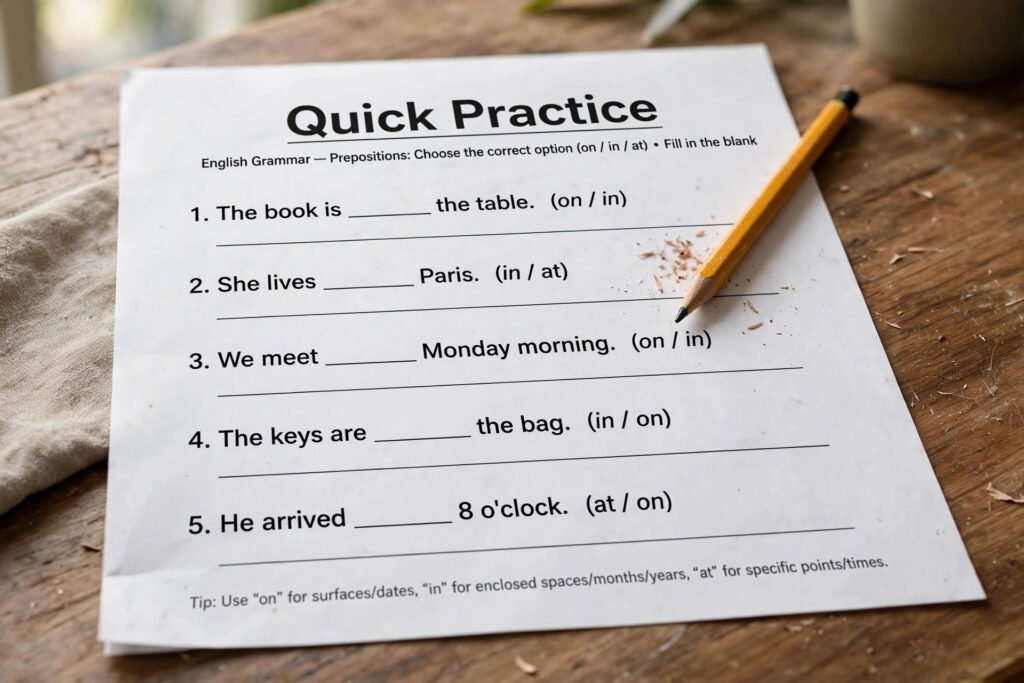
Pick the correct phrase:
- The keys were lost and found (on / in) the same day.
- She learned to swim (on / in) one day.
- The form was filed (on / in) the same day it was signed.
- He read the full report (on / in) one day.
Answers
Answers: 1) on, 2) in, 3) on, 4) in. Questions 2 and 4 measure a length of time, so they take in one day.
Pro Tips to Never Confuse These Again
Four small habits will keep this pair clear forever.
Think in Terms of Meaning
Ask what you really mean: a date, or a duration? The meaning chooses the word for you.
Use the “Replace Test”
Swap ‘the same day’ with ‘Monday’. If ‘on Monday’ sounds right, then on the same day is right too.
Say It Out Loud
Your ear catches errors your eyes miss. Read the sentence once aloud. The wrong preposition usually feels bumpy.
Keep It Simple
When a phrase feels risky, shorten the sentence. Two clear short sentences beat one fancy wrong one.
Better Alternatives You Can Use
For in the same day or on the same day, sometimes another phrase fits even better:
- that very day for stress: ‘He apologized that very day.’
- on that day for a day already mentioned.
- same-day as an adjective: ‘same-day delivery’.
- within 24 hours for an exact duration.
Example Comparison
‘The results came on the same day’ is the safe default. ‘The results came that very day’ adds drama. Same meaning, different weight.
Same-Day as an Adjective: Same-Day Delivery and Appointments
Before a noun, write same-day with a hyphen: same-day delivery, a same-day appointment, same-day registration. Here same-day works as one adjective, so no on or in is needed at all.

Quick Decision Guide: Pick the Right Phrase in 5 Seconds
- Talking about a date? Use on the same day.
- Talking about how long something took? Use in one day.
- Need a deadline before the day ends? Use within the same day.
FAQs
Why do so many people write ‘in the same day’?
Because many languages use one word for both ideas, and learners copy that pattern. English separates them: days and dates take on, longer periods take in.
How do I talk about something finished within 24 hours?
Use in one day or within a day. Example: ‘She finished the course in one day.’ These phrases measure time, which on the same day does not.
Is ‘on the very same day’ correct?
Yes. Adding very just adds stress. ‘He called back on the very same day’ is natural and common when you want to highlight speed.
Can ‘on the same day’ start a sentence?
Yes. ‘On the same day, the team announced the results.’ Starting with the time phrase is normal in news and formal writing.
Which phrase should I use in a formal email?
Use on the same day. It is the standard form in business writing. Example: ‘Your documents were received and approved on the same day.’
Conclusion
When the choice is in the same day or on the same day, pick on for a date and relax. It is one of those small patterns that, once learned, stays correct for life. Use in one day for duration, and your writing will sound natural every time.
