
The phrase strong work ethic appears on almost every resume, so it often sounds dull and overused. If you want your application to stand out, you need fresher words that say the same thing in a sharper way. This guide gives you other ways to say strong work ethic for resumes, cover letters, interviews, and daily work talk. Each option comes with a simple meaning and an example, so you can pick the one that truly fits you.
Quick Answer
The best other ways to say strong work ethic are highly dedicated, diligent, and reliable. Highly dedicated shows commitment, diligent shows careful effort, and reliable shows that people can trust you. For a resume, dependable, disciplined, and results-driven also sound strong and professional.
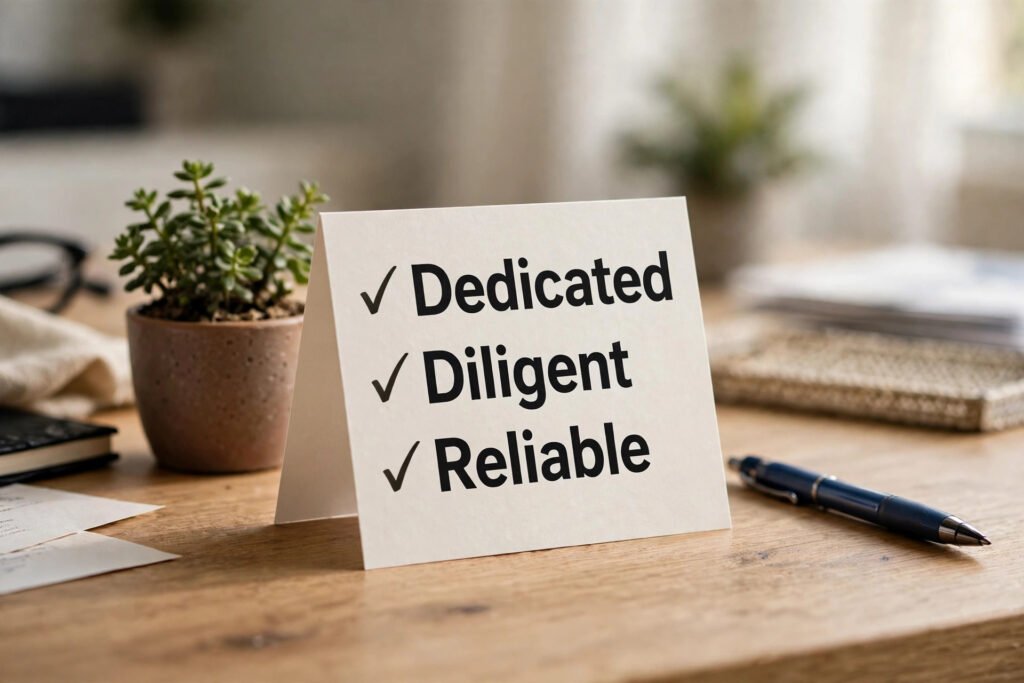
Did You Know: Strong Work Ethic
The idea of a work ethic became famous in 1905, when sociologist Max Weber wrote about the Protestant work ethic. He described how duty, discipline, and hard work shaped modern working life. The phrase is still used in offices today.
What Does “Strong Work Ethic” Mean?
A strong work ethic is a set of values that guides how a person works. It means you take your duties seriously, work hard, and try to do every task well.
People with this quality are honest, careful, and steady. They finish what they start, respect time, and do not wait for others to push them. Employers value it because it builds trust.

Qualities of a Strong Work Ethic
A person with a strong work ethic usually shows these six qualities:

- Discipline: you follow a routine and finish tasks even when you do not feel like it.
- Reliability: others can count on you to show up and deliver on time.
- Responsibility: you own your tasks and accept the results, good or bad.
- Focus: you give full attention to one task instead of jumping between many.
- Honesty: you work with integrity and never cut corners in secret.
- Pride in quality: you check your work and aim to do it well, not just fast.
You do not need all six at a perfect level. Even two or three, shown daily, make a real difference.
Strong Work Ethic or Ethics: Which Is Correct?
For one person, the correct form is work ethic, without the s. It points to that person’s values and habits. Work ethics, with the s, is used for the moral rules of a whole workplace or profession, such as medical ethics at a hospital. So on your resume, always write work ethic.
Is Strong Work Ethic a Skill?
A work ethic is mainly a personal quality, but it also works like a soft skill. You are not simply born with it. Habits like planning your day, meeting deadlines, and checking your work can be learned and practiced. That is good news, because anyone can build a stronger work ethic over time.
How to Prove a Strong Work Ethic Instead of Just Saying It
Anyone can claim a strong work ethic. Far fewer people can prove it. These habits show it clearly:
- Finish tasks before the deadline, not at the last minute.
- Volunteer for hard or boring tasks that others avoid.
- Admit mistakes early and fix them without excuses.
- Keep learning skills that make your work better.
- Stay consistent on slow days, not only on busy ones.
When your actions already show these habits, the words on your resume become easy to believe.
Professional or Polite Way to Say “Strong Work Ethic”
In formal writing, choose calm and clear words. Dedicated, diligent, conscientious, and dependable are safe in almost any office setting. Avoid loud words like tireless in a formal report, because they can sound like praise without proof. Match the word to the situation, and let your results carry the weight.

Quick Reference Table: All 30 Alternatives at a Glance
Use this table to find other ways to say strong work ethic in seconds:
| Alternative | Best For |
|---|---|
| Highly Dedicated | Resume |
| Hardworking | Daily use |
| Reliable | Resume |
| Dependable | Resume |
| Diligent | Formal writing |
| Committed to Excellence | Cover letter |
| Self-Motivated | Resume |
| Disciplined | Interview |
| Responsible | Daily use |
| Goal-Oriented | Resume |
| Results-Driven | Resume |
| Accountable | Reviews |
| Productive | Reviews |
| Consistent Performer | Cover letter |
| Industrious | Formal writing |
| Persistent | Interview |
| Professional | Daily use |
| Committed Worker | Cover letter |
| Detail-Oriented | Resume |
| Task-Focused | Reviews |
| Driven | Interview |
| Ambitious | Cover letter |
| Passionate About Work | Interview |
| Steadfast | References |
| Determined | Interview |
| Efficient | Resume |
| Thorough | Formal writing |
| Loyal to Responsibilities | References |
| Energetic Worker | Daily use |
| Tireless | References |
Tip: Choose other ways to say strong work ethic that match what you actually do. A simple true phrase always beats a fancy empty one.
1. Highly Dedicated
Highly dedicated means you give full commitment to the job. Example: Sara stayed late to finish the product launch.
2. Hardworking
Hardworking is the simple, classic choice. Example: James is a hardworking analyst who checks every report twice.
3. Reliable
Reliable means people can count on you. Example: Our reliable opener has never missed a morning shift.
4. Dependable
Dependable is close to reliable, with a calm, steady feel. Example: Managers give Anna the key client accounts.
5. Diligent
Diligent means careful and steady in your effort. Example: The diligent editor reads every line before publishing.
6. Committed to Excellence
Committed to excellence means you aim for top quality. Example: He revised the design until it was clean.
7. Self-Motivated
Self-motivated means you start without being pushed. Example: She begins her tasks before the morning meeting starts.
8. Disciplined
Disciplined means you follow a routine and resist distractions. Example: The disciplined writer works two focused hours daily.
9. Responsible
Responsible means you own your duties and results. Example: He reported the delay early and fixed the plan.
10. Goal-Oriented
Goal-oriented means you work toward clear targets. Example: The goal-oriented sales rep tracks her numbers every week.
11. Results-Driven
Results-driven means you focus on outcomes, not just activity. Example: She tested new ads and raised sales.
12. Accountable
Accountable means you answer for your work without excuses. Example: He told the client about the error himself.
13. Productive
Productive means you complete a lot of useful work. Example: The productive assistant clears her inbox before noon.
14. Consistent Performer
Consistent performer means your good results repeat every week. Example: His ratings stay high month after month.
15. Industrious
Industrious is a formal word for hardworking. Example: The industrious owner handles orders, billing, and support alone.

16. Persistent
Persistent means you keep going when work gets hard. Example: She tried five fixes before the bug disappeared.
17. Professional
Professional means skilled, calm, and respectful at work. Example: He stayed polite even with an angry customer.
18. Committed Worker
Committed worker means loyal and serious about the job. Example: The committed nurses stayed through the busy season.
19. Detail-Oriented
Detail-oriented means you notice small things others miss. Example: The detail-oriented accountant spotted the invoice error.
20. Task-Focused
Task-focused means you stay on one job until it ends. Example: She finishes one project before starting another.
21. Driven
Driven means a strong inner push to succeed. Example: The driven trainee studies after hours for promotion.
22. Ambitious
Ambitious means you want to grow and achieve more. Example: The ambitious designer aims for a lead role.
23. Passionate About Work
Passionate about work means you truly enjoy what you do. Example: The passionate teacher creates fresh activities weekly.
24. Steadfast
Steadfast means firm and steady under pressure. Example: She stayed steadfast during the crisis and guided the team.
25. Determined
Determined means you decide on a goal and follow through. Example: He finished his certification while working full-time.
26. Efficient
Efficient means you get results without wasting time. Example: Her clear agendas cut meeting time in half.
27. Thorough
Thorough means complete and careful, with nothing missed. Example: The thorough inspector checks every safety point twice.
28. Loyal to Responsibilities
Loyal to responsibilities means you never drop your duties. Example: He covered extra shifts when the team was short.
29. Energetic Worker
Energetic worker means you bring speed and energy to tasks. Example: The energetic crew set up the hall quickly.
30. Tireless
Tireless means you work long without seeming tired. Example: Volunteers were tireless during the weekend food drive.
Best Alternatives to Use on a Resume
On a resume, short and proven words work best. Recruiters scan fast, so choose other ways to say strong work ethic that sound skilled, not emotional:
- Dependable: managers trust you with important work.
- Diligent: you work carefully and check details.
- Results-driven: you focus on outcomes, not just activity.
- Detail-oriented: you catch small errors before they grow.
- Self-motivated: you start tasks without waiting for orders.
Pair each of these other ways to say strong work ethic with a real result, such as a deadline you beat or a target you passed. Proof makes the phrase believable.

Strong Work Ethic Phrases for a Cover Letter
A cover letter gives you more room, so you can use fuller phrases:
- “I am a disciplined and dependable worker who treats every deadline as a promise.”
- “My team knows me as a consistent performer who stays calm under pressure.”
- “I take pride in thorough, honest work and always finish what I start.”
Use only one or two of these other ways to say strong work ethic. Too many sound like bragging and weaken your letter.

How to Describe Your Work Ethic in an Interview
In an interview, do not just use other ways to say strong work ethic. Tell a short story that proves it. Say what the task was, what you did, and how it ended. For example: “When our system failed before a big delivery, I stayed with the team, fixed the errors one by one, and we shipped on time.” A real story like this shows a strong work ethic far better than the phrase alone.

Strong Work Ethic Examples in a Sentence
Here are simple sentences that use other ways to say strong work ethic in natural ways:
- Our manager trusts Leo because he is reliable with every deadline.
- The new editor is diligent and checks every page twice.
- As a goal-oriented nurse, Priya plans each shift with care.
- He stayed steadfast during the crisis and kept the team moving.
- Customers praise her because she is thorough with every order.
Common Mistakes to Avoid When Describing Your Work Ethic

Small wording mistakes can make other ways to say strong work ethic sound weak. Avoid these common ones:
- Mixing up ethic and ethics: write work ethic for one person, not work ethics.
- Claiming without proof: a phrase with no example behind it sounds empty.
- Using fancy words you cannot explain: simple true words win in interviews.
- Repeating one phrase everywhere: vary your words across the resume, letter, and interview.
- Sounding too extreme: words like tireless can feel unreal if your record is average.

Conclusion
The right phrase depends on where you use it. Pick calm, proven words for formal documents, and warmer words for daily talk. Most of all, choose other ways to say strong work ethic that match your real habits, because honest words backed by action always win.
FAQs
What is another word for a strong work ethic?
Common single words are diligent, industrious, dependable, and conscientious. Each one stresses a slightly different side of hard, honest work.
How do I describe my work ethic in one line?
Try a short, provable line such as: “I am a dependable worker who finishes tasks early and checks every detail.” Then support it with one real example.
Is a strong work ethic a skill or a trait?
It is mainly a trait, but it behaves like a soft skill. Daily habits such as planning, focus, and meeting deadlines can build it over time.
Can I write strong work ethic on my resume?
Yes, but one of these other ways to say strong work ethic often works better. Words like results-driven or consistently reliable sound more specific, especially when you add a real result.
What is the difference between work ethic and work ethics?
Work ethic describes one person’s values and habits. Work ethics refers to the moral rules of a group or profession, such as ethics in medicine or law.
